
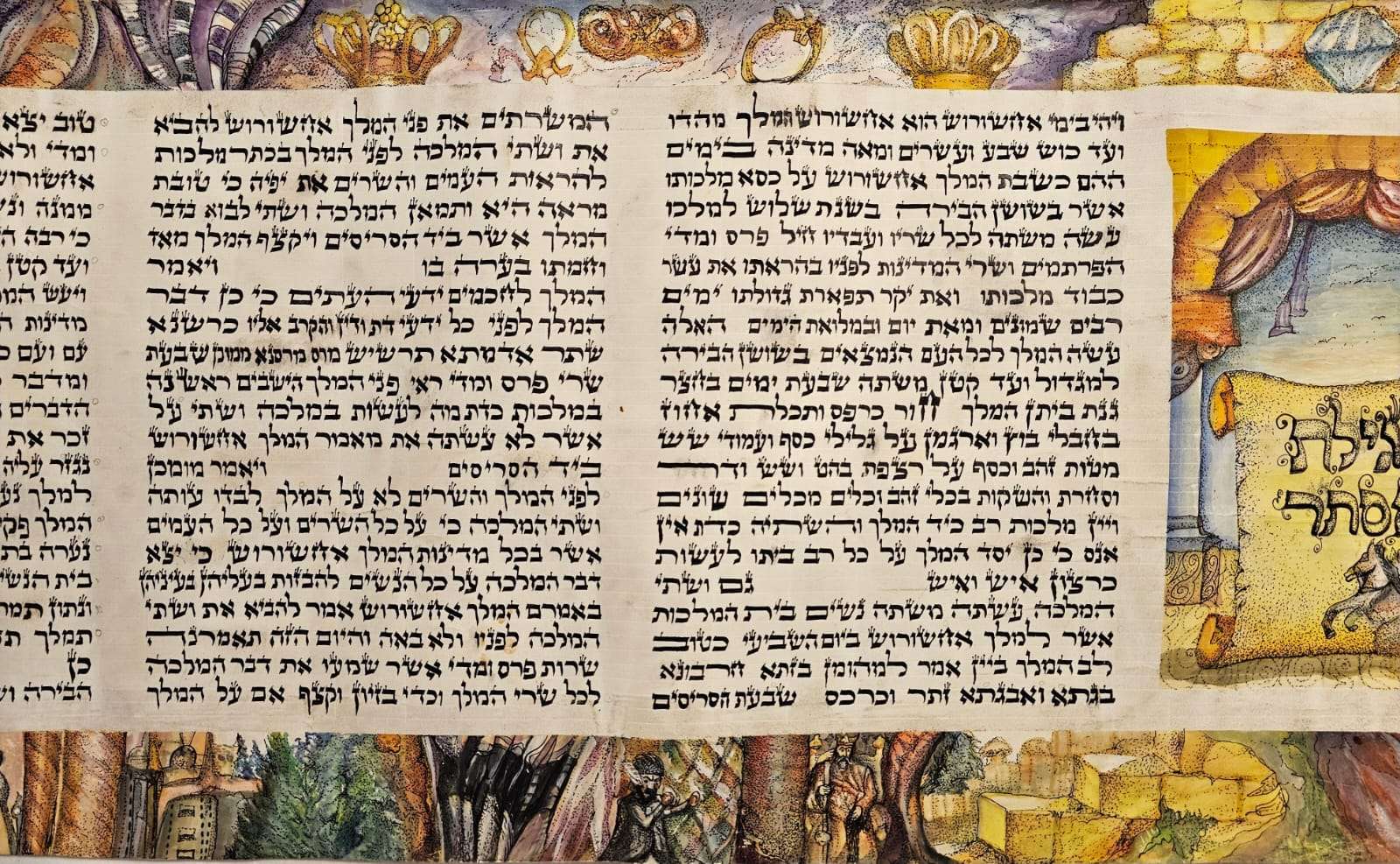
Chanukah: The Revolt in Modi’in and the Legacy of Matityahu
The Uprising in Modi’in
The bitter decrees and brutal religious persecutions continued to escalate, leaving the God-fearing Jews of Judea to realize that the survival of the Torah and Judaism itself hung in the balance. They understood that unless the remnant of Judah acted decisively, the Jewish nation would soon be extinguished, Heaven forbid, leaving no spiritual future for Israel. They concluded that there was no alternative left but to take up sword and spear against the oppressive enemy.
The open uprising against the Greeks erupted in the town of Modi’in. There, Matityahu, son of Yochanan the Kohen Gadol of the Hasmonean family, gathered his two brothers and his five sons — Shimon, Yochanan, Yonatan, Yehudah, and Elazar — and openly declared their intent to rebel against Greek rule.
When the Syrian-Greek governor Polypus received word of the sedition, he immediately marched with a detachment of soldiers to Modi’in. Erecting a statue (idol) in the town square, he commanded all the townspeople to come forward and offer sacrifice to the idol.
Addressing Matityahu directly, Polypus declared: “Matityahu, you are a respected leader and elder among your people! Obey the command of King Antiochus, and you shall live and not die.”
With fierce and proud defiance, Matityahu answered: “I fulfill the command of my King. And as for you, do the command of your king!”
Even as they spoke, one of Polypus’s officers — a Jewish Hellenizer (Mityaven) — stepped forward and shouted: “I am astonished at the king’s officers and army! How long will you hold your peace and refrain from taking vengeance upon Matityahu for daring to reject the king’s command?”
With those words, the traitor drew his sword, rushed up to the altar, slaughtered a pig, and offered it up as a sacrifice, mocking the sacred service of the Beit HaMikdash.
At that breathtaking sight, a surge of burning jealousy for Hashem’s honor seized Matityahu. Rushing forward with a drawn sword, he struck the wicked traitor down with a single blow. The traitor’s body fell sprawling across the pagan altar and was consumed in flames alongside the swine's flesh, while his severed head flew through the air and landed directly beside the Greek commander! In the sudden panic that erupted, Matityahu and his sons struck down the governor and many of his soldiers, forcing the rest to flee for their lives.
The Maccabees
Matityahu did not pause. Sounding the shofar, he proclaimed across the town:
“Whoever is for Hashem, let him follow me! Whoever is zealous for the Torah and upholds His covenant, come after me!”
He dispatched his son Yehudah to scour the countryside, searching the caves and hiding places of the hills to gather every faithful Jew whose heart burned with pure zeal for Hashem. As Yehudah traveled from place to place raising the battle cry — “Mi LaHashem Elai!” ("Whoever is for Hashem, join me!") — bands of righteous Jews flocked to his standard and returned with him to Modi’in.
Gathering the loyal volunteers, Matityahu addressed them: “Welcome, my brothers! Why should we multiply words and counsel? There is nothing left for us here except to pour out our prayers to God to rescue our remnant. Be strong and let us strengthen ourselves in battle, and salvation belongs to Hashem!”
Strengthened in spirit, the men readied themselves for war. Upon their battle banners they inscribed the immortal acronym מַכַּבִּי (MACCABI), derived from the verse:
"מִי כָמֹכָה בָּאֵלִם ה'!"
“Who is like You among the heavenly powers, Hashem!”
Matityahu and his newly formed army marched from town to town. They struck down the spiritual polluters of Israel — both Greeks and Hellenizers — shattered the pagan altars, and they circumcised the children of Israel.
Matityahu’s Dying Testament
Sensing that his final days were drawing near, Matityahu summoned his sons to his bedside to charge them with continuing the holy war against Greece:
“My sons, I know that mighty battles now lie ahead of you against the Greeks for having risen up to defend our people. Now, my sons, be zealous for the honor of Hashem and do not fear death! For if you fall in the wars of Hashem, you shall receive your reward from Heaven, and Hashem shall grant you true grace and glory in the World to Come.
Remember our ancestor Pinchas, who acted with zeal for his God and risked his life to slay the Midianite princess, and was rewarded by Hashem for this for all generations! Therefore, my sons, be strong and courageous; do not tremble or be dismayed before these impure gentiles. For they trust in fleeting physical might and perishable strength, whereas you trust in the power of Hashem our God, Who never fades or passes away, and Who is fully able to grant you victory even when you are few in number! Gather together, my sons, as one man with a single heart, be zealous for Hashem as our fathers did, and Hashem shall cast the dread and terror of you upon your enemies!”
Turning to his eldest son, Shimon, Matityahu declared: “My son! I know that Hashem has blessed you with wisdom and discernment, and that you possess the ability to guide the people of Hashem with sound counsel and upright leadership. Strive with all your might to lead and protect this nation, and may Hashem be your help!”
Finally, Matityahu called his son Yehudah to his side and blessed him:
“My son Yehudah, hearken to my counsel, and wherever you turn, you shall act wisely and succeed! I know that you are a man of war, whom God has endowed with strength, valor, and a heart like a lion’s that neither melts nor quails. Now, honor Hashem with your might — for He gave you all you have, and all your strength stems from Him — and go forth to wage the holy wars with all your power! Do not hesitate to march in every direction across our Holy Land — east, west, north, and south — to exact vengeance upon the gentiles who have defiled it. You shall be the Sar HaTzava and Mashuach Milchamah for your Jewish brethren, and you shall lead them into battle!”
As he concluded his blessing, Matityahu asked for a flask of oil to be brought before him. Pouring the oil over Yehudah’s head, he anointed him as Mashuach Milchamah. At that sublime moment, the entire assembly raised a great shout, sounded the shofar, and cried out in unison:
“Long live the leader! Long live the anointed warrior of battle!”